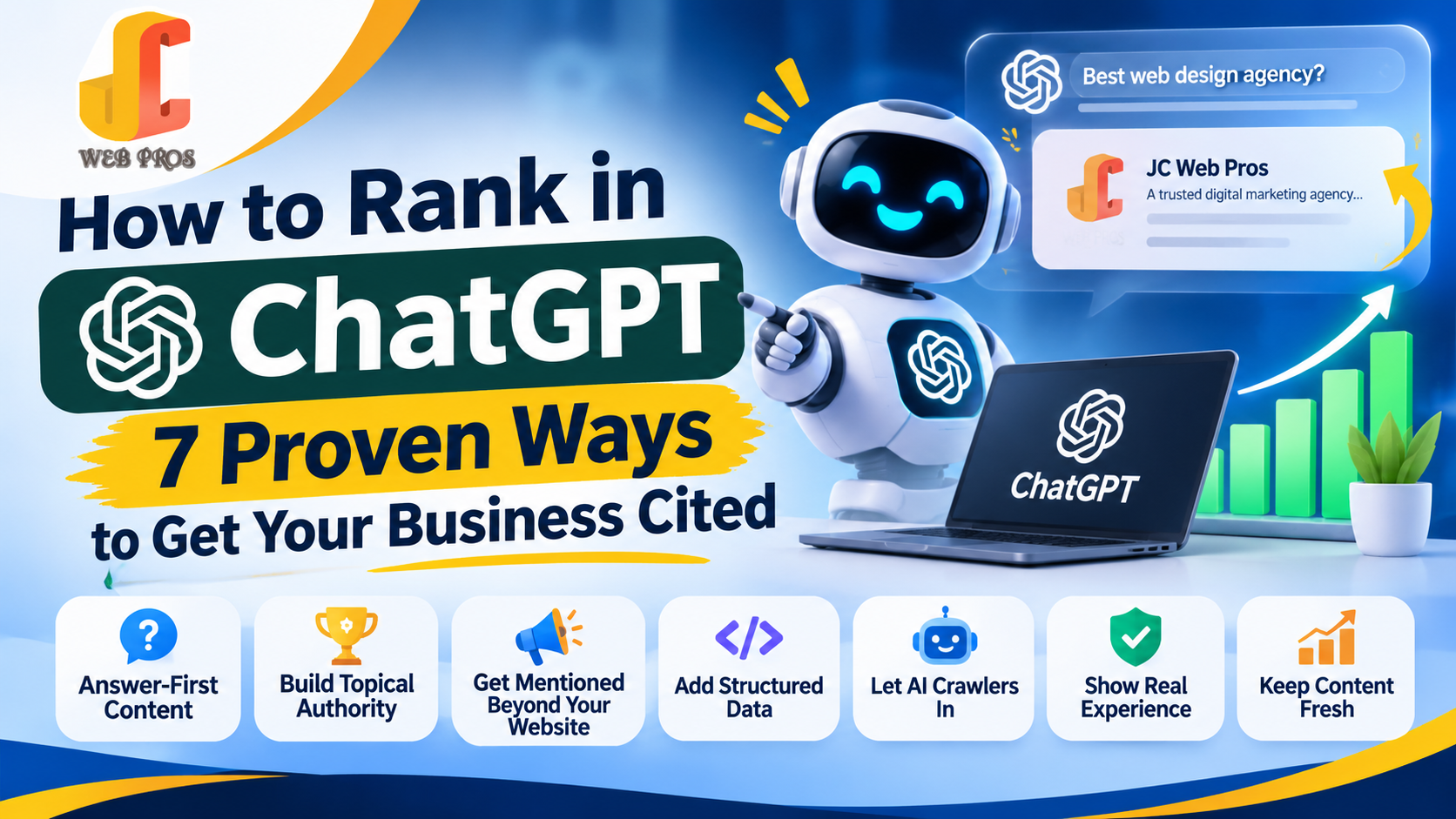
A few years ago, “finding a local business” meant typing a few keywords into Google and scrolling. Today, people just ask: “Who’s a reliable web design company for a small business?” And ChatGPT answers with names.
This isn’t a niche habit anymore. Hundreds of millions of people use ChatGPT every week, and many of them are looking for exactly the kind of business you run. If your brand isn’t part of those answers, you’re missing customers who are ready to buy.
At JC Web Pros, we build websites that don’t just look good; they get found, cited, and chosen on Google and inside AI answers. That’s what this guide is about.
One quick clarification first. ChatGPT doesn’t have “rankings” the way Google does. It cites sources. So the goal is to become a source it trusts enough to mention. Here’s how.
1. Write Answer-First Content
Imagine a customer asks, “How much does a small business website cost?” and your page opens with three paragraphs about the history of the internet. An AI tool will skip it and use a page that gets to the point.
Try this:
- Put a direct 2-3 sentence answer right under every heading.
- Write headings as real questions your customers ask.
- Add details, examples, and context after the answer.
- Make your page title match the question it answers, for example, “How Much Does a Small Business Website Cost?”
Why this matters more than you think: ChatGPT reads far more pages than it actually cites. One analysis found that only about 15 percent of the pages it retrieved made it into the final answer, and the choice came down to title alignment, specificity, and clarity. In other words, getting found isn’t enough. Your page has to be the easiest one to quote.
2. Build Topical Authority, Not Just One Page
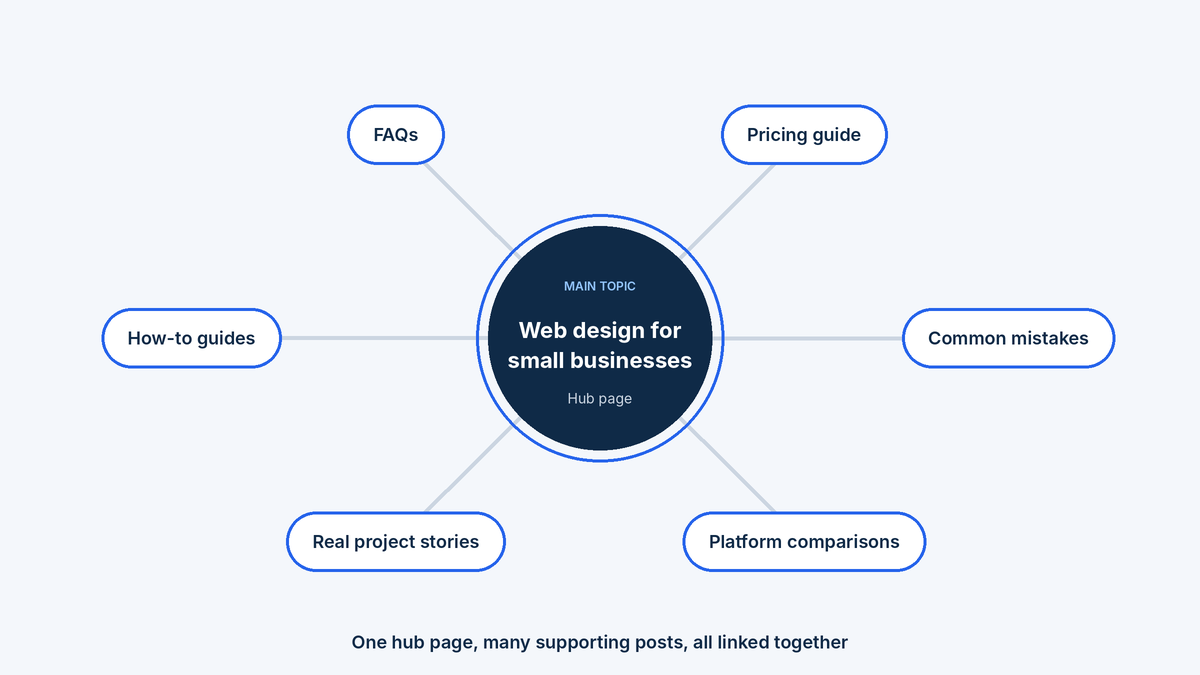
A single post on a topic rarely makes you an authority. Depth does.
Say your main topic is “web design for small businesses.” Around it, publish posts on pricing, common mistakes, platform comparisons, and real project stories. Then link them together. For example, a reader of this post might also want our guide on web design for small businesses or our breakdown of how SEO works.
This matters more every month. OpenAI announced that ChatGPT has reached 900 million weekly active users, as TechCrunch reported in February 2026. With that many people asking questions, the sources that cover a topic thoroughly have a better chance of being picked.
3. Get Mentioned Beyond Your Own Website
What you say about yourself matters less than what others say about you. Mentions on trusted third-party sites help confirm that your business is real and respected.
Try this:
- Keep your Google Business Profile and directory listings complete and consistent.
- Collect genuine customer reviews.
- Contribute guest posts, interviews, or expert quotes to industry sites.
- Join communities where your customers ask questions.
- Publish short YouTube videos that answer your customers’ most common questions.
Keep your business name, description, and contact details identical everywhere, so AI can connect the dots about who you are.
Blog posts and “best of” lists carry extra weight. In a Surfer SEO study of AI recommendations, blog posts made up only 28.7% of cited sources, yet brand mentions inside them showed the strongest link to how strongly AI recommended a brand. That’s a correlation, not proof of cause, but it points to a clear action: get featured in helpful articles and comparison lists in your industry. Ahrefs suggests working backward from the sites ChatGPT already cites, rather than guessing which sites matter.
Don’t ignore YouTube. In an Ahrefs analysis of 75,000 brands, YouTube mentions showed the strongest link with ChatGPT visibility, ahead of every other factor tested, with branded web mentions coming next. You don’t need a studio setup. A simple how-to or FAQ video, with your brand name in the title and description, is a good start. As with any study like this, treat it as a strong signal, not a guarantee.
4. Add Structured Data (Schema Markup)
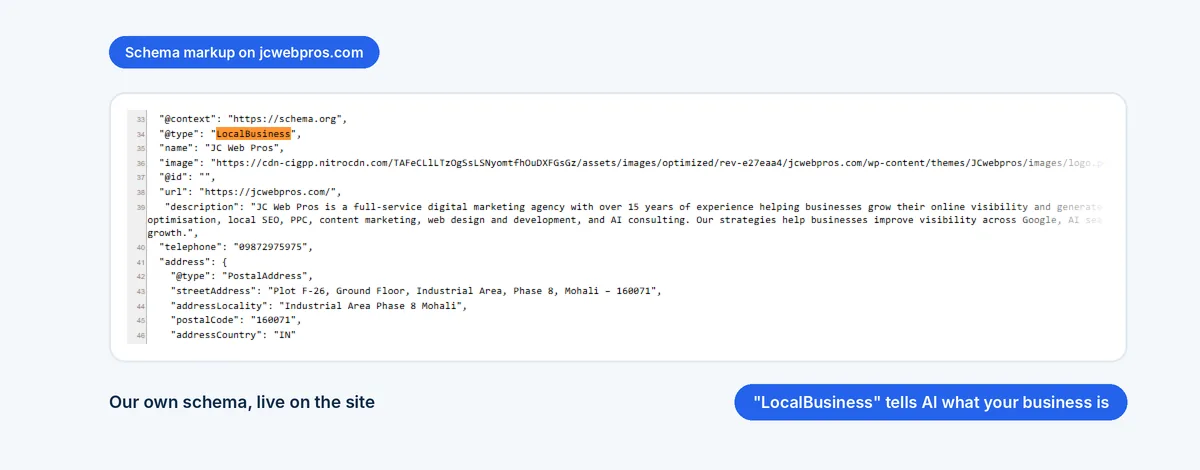
Schema markup is a small piece of code that tells machines what your page is about: a business, a service, an FAQ, an author. Google explains the basics in its structured data guide, and the full vocabulary lives at Schema.org.
Try this:
- Add Organization or LocalBusiness schema to your site.
- Add FAQ schema to pages that answer common questions.
- Add Article schema with author and date to every blog post.
It’s not a magic switch, but it removes guesswork for crawlers.
5. Let AI Crawlers In
This one is more common than you’d think: sites accidentally block the very bots that could surface them.
According to OpenAI’s crawler documentation, OAI-SearchBot is used to surface websites in ChatGPT’s search features, and sites that opt out of it won’t be shown in ChatGPT search answers. The same docs note that each setting is independent, so you can allow OAI-SearchBot for search while disallowing GPTBot, which relates to training.
Try this:
- Open your robots.txt file and make sure OAI-SearchBot isn’t blocked.
- Keep your site fast, mobile-friendly, and built on clean HTML.
- Don’t hide key content behind logins or heavy pop-ups.
- Keep your XML sitemap updated.
Also, if you change your robots.txt, OpenAI says it can take around 24 hours for its systems to adjust, so give it a day before you re-test.
6. Show Real Experience and Trust
AI has no shortage of generic content to choose from. What stands out is proof that real people with real expertise are behind your business.
Try this:
- Add author bios with credentials to your articles.
- Publish case studies with real results.
- Share original insights from your own projects.
- Keep a clear About page and visible contact details.
7. Keep Content Fresh and Track Your Results
AI visibility is not a one-time project. Update your key pages regularly and show the “last updated” date.
Then measure it. Ask ChatGPT the questions your customers would ask and note who gets cited. You can also check your analytics, because ChatGPT adds the UTM parameter utm_source=chatgpt.com to referral URLs, which makes inbound traffic easy to spot. OpenAI’s Publishers and Developers FAQ also confirms that publishers who allow OAI-SearchBot can track ChatGPT referral traffic using tools like Google Analytics.
Track mentions and citations separately. Being named and being linked are not the same thing. A BuzzStream study found that only 23.1% of brand mentions in AI answers included a citation, so a brand can be talked about without getting a single link. When you test your visibility, note two things: whether your brand is named, and whether your website is linked.
Final Thoughts
There’s no secret trick here. The businesses that get cited do the basics well: clear answers, deep expertise, a trusted reputation across the web, and a technically healthy website. The upside is that these are the same habits that improve your Google rankings too.
Pick one or two of the steps above, start this week, and check back in a month.
Want Your Business to Show Up in ChatGPT Answers?
At JC Web Pros, we help businesses build fast, search-friendly websites and content that get discovered on Google and cited in AI tools like ChatGPT. Whether you’re starting a new site or fixing an existing one, our team can help you put these strategies into action.
Get in touch with JC Web Pros and let’s get your brand into the answers your customers are already asking for.


Share This Post :